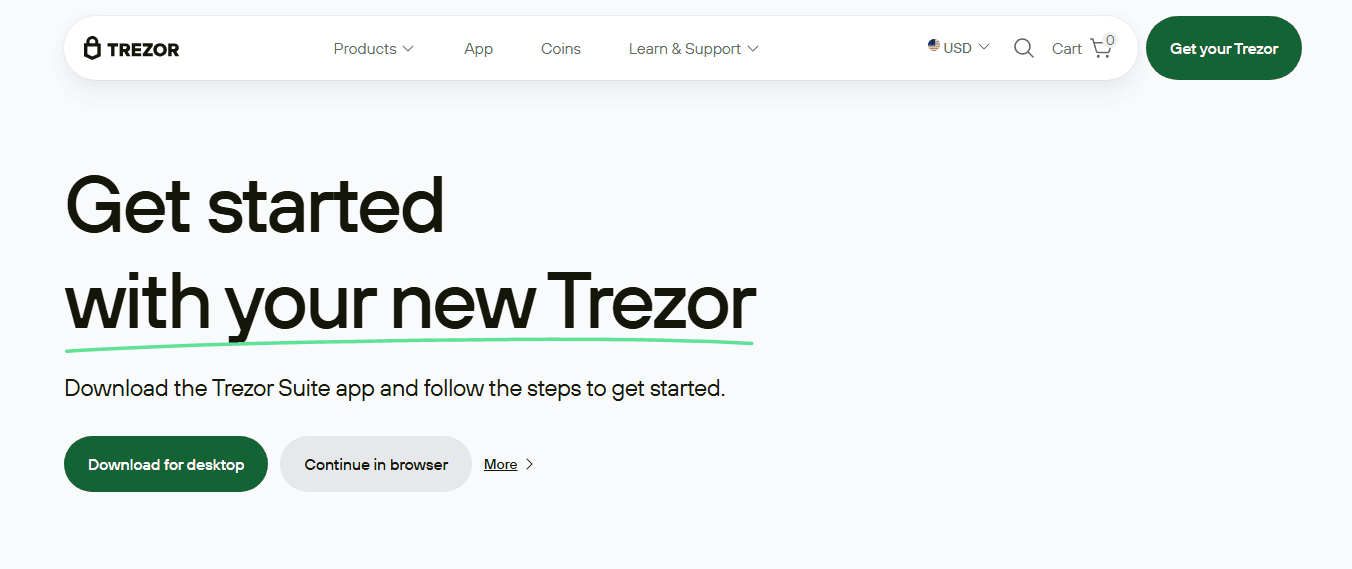
Quick-Start Guide: Setting Up Your Trezor Wallet via Trezor.io/Start
If you’re serious about keeping your cryptocurrency secure, a hardware wallet is the best way to go. Trezor is one of the most trusted options, designed to store your private keys offline and protect you from hacks. The official setup starts at Trezor.io/start, which ensures you install authentic software, initialize your device safely, and follow best security practices.
This guide walks you through the process quickly and safely.
Why Trezor.io/Start Is Essential
Setting up your Trezor wallet from unofficial sources is risky. Fake websites can trick you into sharing your recovery seed, giving attackers full access to your funds.
Using Trezor.io/start guarantees:
Downloading genuine Trezor software
Installing verified firmware on your device
Creating or restoring wallets securely
Learning proper recovery seed handling
Always type the URL manually in your browser to avoid phishing scams.
What You’ll Need
Before starting, gather the following:
Trezor device (new or factory-reset)
Computer (desktop or laptop)
USB or USB-C cable (original from Trezor)
Stable internet connection
Pen and paper (for recovery seed)
Private workspace
Never store recovery seeds digitally or on cloud storage.
Step 1: Connect Your Trezor
Go to Trezor.io/start.
Choose your device model (Model One or Model T).
Connect the Trezor to your computer.
New devices come without firmware for security—this is normal.
Step 2: Install Trezor Suite
Trezor Suite is the official application that manages your wallet. It lets you:
Check balances and transaction history
Send and receive cryptocurrency
Manage multiple assets
Update firmware
Download only from the official website to avoid fake software.
Step 3: Install Firmware
The device will prompt you to install the latest firmware:
Confirm installation on the device screen
Wait until the process completes fully
Firmware updates enhance security and features
Do not unplug your device during this step.
Step 4: Create or Recover a Wallet
Choose one option:
Create New Wallet – Generates a fresh wallet with a new recovery seed
Recover Wallet – Restores an existing wallet using your seed
All seed input is done on the Trezor device, never on your computer.
Step 5: Backup Your Recovery Seed
Your Trezor will generate a 12-word or 24-word recovery seed.
Write down the words in order
Keep the backup offline in a safe place
Never photograph or store digitally
Never share it
Losing your recovery seed means losing access to your funds forever.
Step 6: Confirm Your Recovery Seed
The device will ask you to verify certain words to ensure accuracy.
If verification fails, restart the setup and generate a new wallet
This ensures you can recover your wallet in the future.
Step 7: Set a PIN
A PIN code protects the device from unauthorized access:
Random keypad layout prevents theft
Multiple wrong attempts trigger increasing delays
PIN is required whenever the device is connected
Keep your PIN separate from your recovery seed.
Using Your Wallet
Receiving Cryptocurrency
Open Trezor Suite
Generate a receiving address
Verify it on the device screen
Share the verified address
Sending Cryptocurrency
Enter transaction details in Trezor Suite
Confirm details on the device screen
Approve the transaction physically
Always trust the Trezor device screen over your computer or browser.
Supported Assets
Trezor supports a wide range of cryptocurrencies, including:
Bitcoin (BTC)
Ethereum (ETH)
Litecoin (LTC)
Cardano (ADA)
Polygon (MATIC)
ERC-20 tokens
Asset availability may vary by device model and firmware version.
Optional Security Features
Passphrase Protection – Adds an extra secret phrase to hide wallets
Hidden Wallets – Multiple wallets under one recovery seed
Shamir Backup (Model T) – Splits recovery seed into multiple shares for safer backup
Common Setup Mistakes to Avoid
Using unofficial setup sites
Entering recovery seeds on computers
Storing seeds digitally
Buying used hardware wallets
Ignoring firmware updates
Most crypto losses happen because the recovery seed was mishandled.
Lost or Broken Device
If your Trezor is lost or damaged:
Funds remain safe
Restore the wallet on a new device using the recovery seed
Use Trezor.io/start to regain access
Without the recovery seed, there is no way to recover your wallet.
Quick Tips for Safety
Always start at Trezor.io/start
Verify transactions on the device screen
Keep recovery seed offline and secure
Regularly update firmware
Consider passphrases or Shamir Backup for extra security
Following these steps ensures your cryptocurrency is safe and fully under your control.